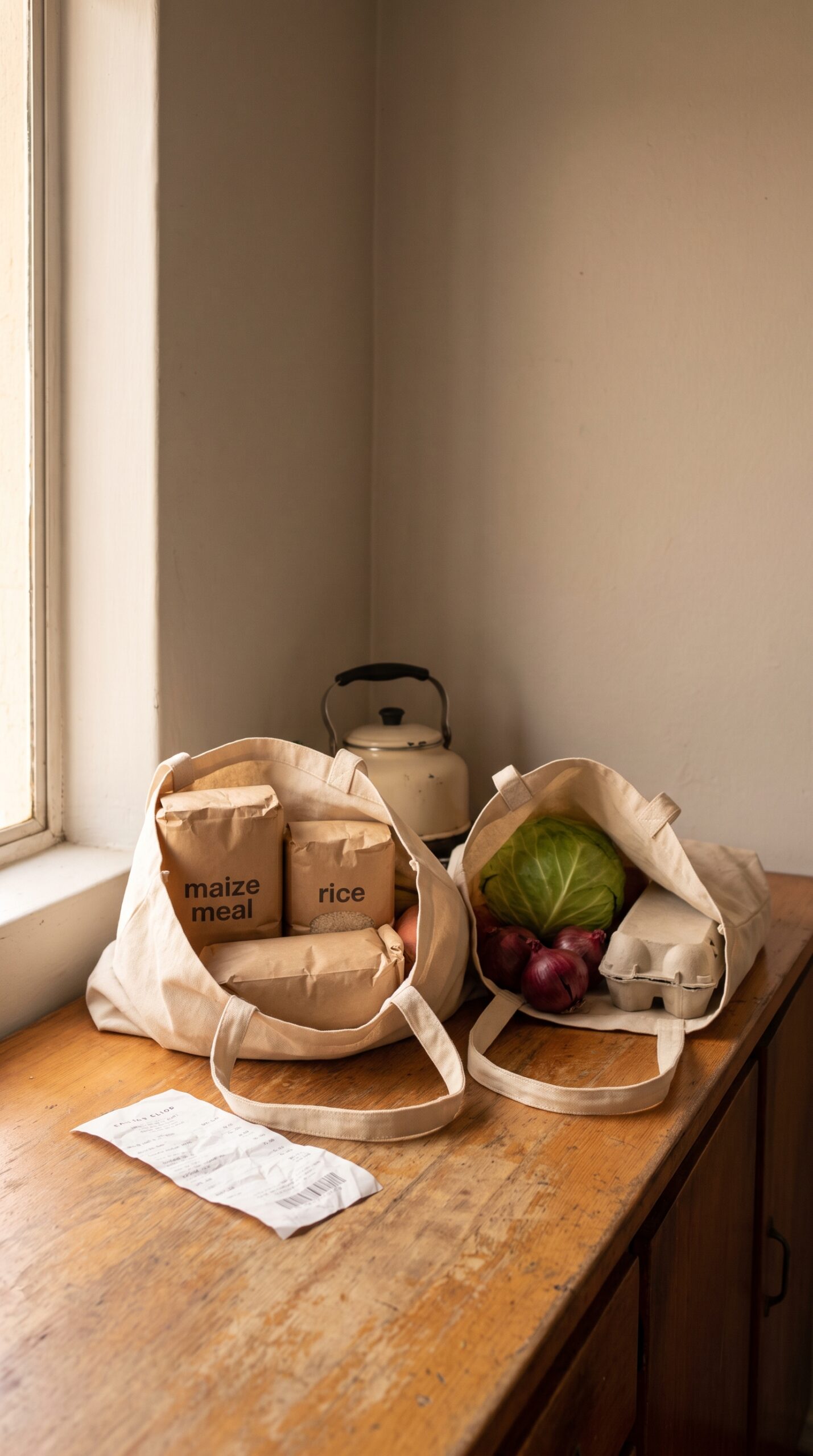
A budget meal plan made with AI is a starting draft, not a price quote or a nutrition plan. Give it your spending limit and available ingredients, then check the shopping list against real prices and your household's needs.
The food money has to last until payday, and there are more people to feed than there is money in the account. You know you should plan, but sitting down with a notebook and a calculator at the end of a long day is the last thing you want to do.
Give an AI assistant your budget and household size and ask for a draft meal plan and shopping list. You still make the decisions. If the checked total exceeds your budget, revise the plan rather than trusting an invented saving.
The video uses a South African family and amounts in rand as its example. The method works the same wherever you live and whatever currency you use.
Step by step
- Know your number. Before you open the AI, work out how much you actually have for food until the next payday. Do not assume last month's spending minus an arbitrary amount will cover this month's needs.
- Tell it who you're feeding. Say how many people, their ages, and anything that matters: a teenager who eats double, a vegetarian, a child with an allergy, someone who won't touch fish. The AI only knows what you tell it.
- Tell it what you already have. Half a bag of rice, a few tins of tomatoes, frozen peas, flour, spices. Ask it to use these ingredients first and avoid listing them for purchase again.
- Ask for the plan and the list together. A meal plan without a shopping list isn't much use at the shop. Ask for both, with the list grouped by aisle so you walk the shop once and don't wander past the snacks three times.
- Check it against real prices. The AI doesn't know what things cost in your shop this week. Take the list with you (or open your supermarket's app), compare, and swap anything that's expensive right now for something that's on offer.
What a good plan looks like
A useful plan leans on cheap, filling staples: rice, pasta, oats, potatoes, lentils, dried or tinned beans, eggs, frozen vegetables and whatever fresh produce is in season. You'll usually see meals like a big pot of lentil and vegetable soup, bean chilli with rice, egg fried rice, pasta with a tomato and tinned-fish sauce, or a tray of roast vegetables with sausages stretched across two nights.
Good plans also cook once and eat twice. Ask for it. "Make Sunday's meal big enough for Monday's lunch" is the kind of instruction that quietly saves you money all month.
Copy this prompt
Make me a meal plan and shopping list for [number] people for one month, on a budget of [your amount]. Use cheap, filling meals, and group the shopping list by shop aisle.
Variation 1: use what you already have
Here is what's in my cupboard and freezer: [list]. Plan two weeks of suppers for [number] people that use these up first, and tell me the few extra things I need to buy.
Variation 2: the last week before payday
I have [amount] left to feed [number] people for the next seven days. Plan simple meals, include breakfast and packed lunches, and keep the shopping list as short as possible.
If the first plan isn't right, just say so: "less rice, more vegetables", "no fish", "my kids won't eat lentils, try again". You can keep adjusting until it fits your family.
Stay in charge
- AI doesn't know today's prices. Any totals it gives you are guesses. Check the prices where you shop and adjust the list before you trust the numbers.
- Check the maths. AI can add up wrong while sounding completely sure. Run the total on your phone's calculator.
- Mention health needs. If someone in the house has diabetes, high blood pressure, an allergy or another dietary need, say so, and follow the advice of their doctor or dietitian over anything the AI suggests.
- Keep your money details private. You only need to share a budget figure. There's no need to share bank statements, account numbers or your full income.
Small habits that make the plan work
A plan only helps if you use it. Keep it somewhere visible and shop from the checked list. Follow food labels and safe storage instructions, especially when saving leftovers. At the end of the month, note what worked and what nobody ate, then adjust the next draft. There is no fixed number of rounds that guarantees a perfect plan.
For food handling and storage, consult the World Health Organization's Five Keys to Safer Food. AI meal suggestions do not replace food safety guidance.
Frequently asked questions
Can AI guarantee that the meals fit my budget?
No. Check quantities, current shop prices and the total yourself. An AI estimate is not a retailer's quote.
Are bigger packs always cheaper?
No. Compare the price per kilogram or litre, your available cash and how much you can safely store and use before it spoils.
Can I use the plan for an allergy or medical diet?
Do not rely on AI to approve a medical diet or ingredient safety. Check labels and follow the advice of a qualified healthcare professional who knows the person's needs.
Try next
- Fridge half empty and no plan for tonight? What's for supper? shows how to get three quick supper ideas from what you already have.
- AI for beginners: practise writing clear prompts.
- Explain an official letter: check meaning without sharing private details.
Follow Everyday AI from Ankor for practical ways AI can help you at home. Visit ankor.co.za.
Stay in the loop
Get practical AI tips and product updates, no spam, unsubscribe any time.