Job interview practice starts with the role
Look at the job description, your application and any interview instructions. Note the skills requested, the work involved and the experience you can honestly explain. Use the employer’s own public information to understand the organisation. If the assistant adds a company fact, check it against that source before repeating it. Do not ask AI to invent a reason you have always wanted to work there. The National Careers Service interview guidance recommends preparation around the role, company research and examples from your experience. It also suggests practising answers and preparing questions of your own. The service is UK based; the practical preparation ideas are useful to adapt elsewhere. Check the actual interview format. A video call, phone conversation, panel or practical assessment may require different preparation. Your invitation is the authority for the time, place and instructions.Give AI enough context without private details
You can paste the relevant public job description or summarise it. Leave out personal identifiers, home addresses and unrelated private information. You do not need to upload a complete application containing sensitive details just to practise a question. Explain what stage you are at: first job, a career change or a role similar to your previous work. Include the experience you want to practise discussing. If you have never done a particular task, say so. You can also tell it the language you intend to use in the interview. Practising in another language first may help you clarify a thought, but check any translation and keep the final meaning accurate. The assistant should ask for missing information instead of filling it with a fictional employment history.Ask one question and wait
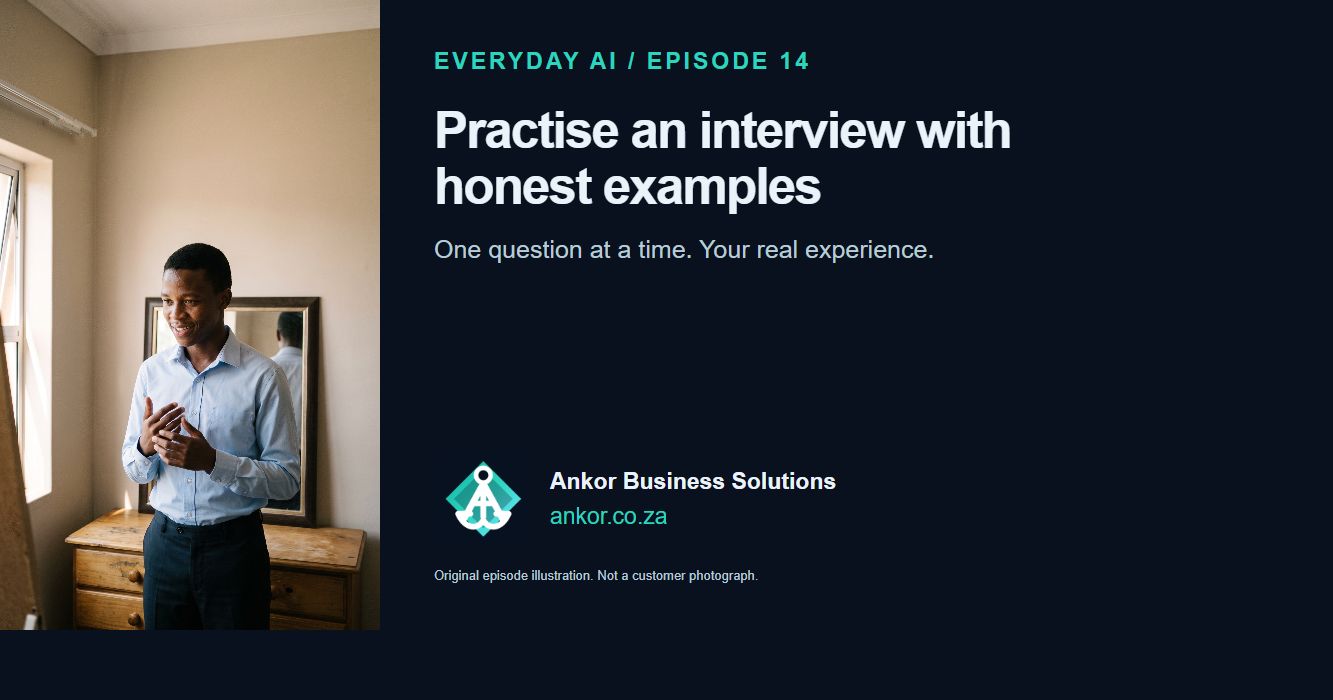
The on-screen video prompt is:Be my interviewer for a shop assistant job. Ask one question at a time and give me feedback.The spoken request similarly asks for a shop assistant interviewer, one question at a time and feedback. To make the exercise easier to follow, add:
Wait for my answer before giving feedback. Identify one thing that was clear and one thing I could improve. Use only facts I have provided. Do not write an invented achievement for me.A list of twenty questions can be useful later, but it is different from a practice conversation. Begin with one question so you can hear yourself form an answer. If the assistant moves on too quickly, tell it to stop and let you try again. You control the pace.
Answer before reading a model answer
Try your own response first. This shows where you lose the thread, need a better example or use words that do not sound natural to you. Speak the answer aloud even if you then type a short version for feedback. Reading silently can hide a sentence that is difficult to say. You can practise without a voice feature by speaking first and making notes afterwards. Use actual examples. Your experience might come from paid work, volunteering, education, a team activity or a responsibility at home. Explain the context accurately instead of relabelling it as employment. Do not borrow a polished success story from AI and present it as something you did. A smaller true example gives you something you can discuss if the interviewer asks a follow-up question.Make feedback concrete
Ask which part of the answer addressed the question and which part was unclear. Request a reason for the suggestion rather than accepting a general rating. A useful review checks whether you explained the situation, your own action and what happened. If you use the STAR structure, include the situation, task, action and result, while keeping each part factual. The assistant may suggest adding a number or outcome. Add it only if you know it is correct. “Helped the team finish the task” should not become “increased productivity by 40 per cent” without evidence. If you do not know the result, explain what you did and what you learned. You can be precise about your contribution without inventing a measurement.Try again in your own words
Use the feedback to produce a clearer version, then put the screen aside and answer again. Keep the idea, not a script you must recite perfectly. For a question about why you want the role, connect a true interest or skill to something in the job description. For a question about a weakness, choose something honest and explain a real step you are taking. Ask for a follow-up question based on your answer. This helps you check whether you understand your own example, rather than only memorising its opening line. If an AI reply feels unhelpful or overconfident, ask a trusted person to practise with you when possible. Their feedback may reveal something the assistant missed.Prepare questions for the employer
An interview is also an opportunity to understand the role. Write a few questions based on information you still need, such as the normal work pattern, training or the responsibilities of the position. Check that the answer is not already clear in the invitation or job description. Choose questions you actually want answered rather than asking AI to make you sound impressive. Keep any notes short enough to use naturally. If you are allowed to bring them, use them as prompts instead of reading every line. The assistant can help tidy wording. You decide whether the question is appropriate for the situation.Plan the practical details
Confirm the date, time, location or call link. Plan travel and what you need to bring from the actual instructions. Do not assume every employer asks for the same documents. For an online interview, check your connection, camera, microphone and surroundings in advance. Keep the contact details needed if a technical problem occurs. After the interview, write down the questions you remember and the answers you want to improve. That becomes useful job interview practice material for the next opportunity. It does not require pretending that a difficult answer went well.Job interview practice with AI: frequently asked questions
Can AI predict the exact interview questions?
No. It can create practice questions based on the role, but the employer’s actual questions may differ.What if I have little paid work experience?
Use truthful examples from education, volunteering, activities or responsibilities. Explain the context accurately and do not invent employment.Should I memorise the AI’s answer?
Use feedback to clarify your own answer, then practise speaking naturally. Keep every example and claim true.Is it okay to use AI for job interview practice?
Yes, as a rehearsal partner. It can ask questions and comment on clarity. It cannot know what the employer will ask or judge you as they would, so treat its feedback as a suggestion.How do I make the AI’s feedback more useful?
Ask for one thing that was clear and one thing to improve, with a reason. Tell it to use only the facts you gave and to wait for your answer before commenting.Continue practising useful AI habits
Ankor’s ChatGPT for Beginners course helps with giving clear instructions. Our guide to explaining an official letter with AI applies the same habit of checking a summary against the real source. Running your own business rather than job hunting? The Essential Business Package helps with the weekly admin. It won’t find you a job, though. Follow Everyday AI from Ankor for practical tasks where your own facts and judgement stay central.Watch Everyday AI Episode 14
Ankor tips
Stay in the loop
Practical AI tips for small businesses and the odd product update. No spam, unsubscribe any time.

