 Claude for BeginnersFree course · about 1 hour
How to Ask for What You Actually Want
Quick answer. How to ask Claude: The single most valuable skill: a simple three-part recipe (context, task, format) for getting genuinely useful answers from Claude.

MODULE 2: How to Ask for What You Actually Want
By the end of this module, you’ll be able to: Write a request that gets you a genuinely useful answer the first time, using a simple three-part recipe.
Time: about 15 minutes · You’ll need: Module 1 finished.
Why this matters
This is the most valuable skill in the whole course. The quality of what you get out of Claude depends almost entirely on the quality of what you put in. Learn this one recipe and everything else gets easier.
Lesson 2.1: The three-part recipe
A strong request gives Claude three things: context, task, and format.
- Context is who you are and what the situation is.
- Task is the exact job you want done.
- Format is what the finished thing should look like, such as length or tone.
Why this matters: Claude cannot see your world. Two lines of context often make the difference between a generic answer and one that fits your business perfectly.
Lesson 2.2: Weak request versus strong request
Look at the difference.
Weak: Write an email.
Strong: I run a small Afrikaans tutoring business. Write a short, friendly email to a parent whose child missed two lessons this month, gently asking if everything is okay and offering a catch-up session. Keep it under 120 words.
The strong version names the situation, the exact job, and the length. It comes back almost ready to send.
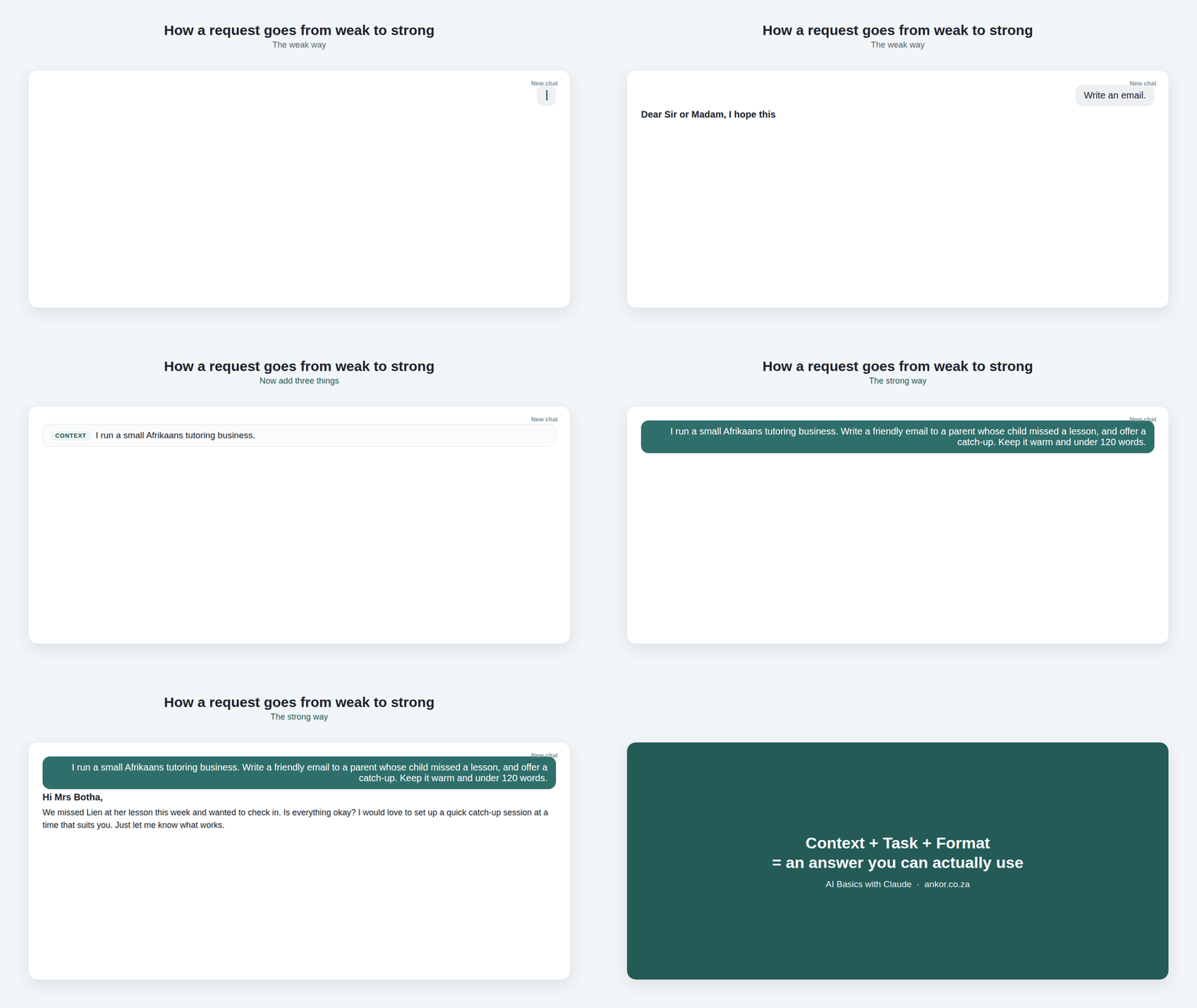
Example: turn a blank stare into a finished paragraph
Say you sell handmade candles. Instead of write a product description, try: I sell handmade soy candles online. Write a product description for a lavender candle. Make it about 60 words, warm and calming in tone. You get something you can paste straight onto your shop page.
Common mistakes to avoid
Mistake 1: Leaving out the context.
Without it, Claude writes for a generic stranger. One line about your business changes everything.
Mistake 2: Asking for two big things at once.
“Write my whole website” is too much. Ask for one page, then the next. Small, clear tasks give better results.
Mistake 3: Not saying how long or what tone.
If you do not name a length or tone, you get Claude’s guess. Tell it “about 60 words, friendly” and you stay in control.
Quick practice (10 minutes)
Do this now:
- Pick a real task from your work.
- Write it as one message with all three parts: context, task, format.
- Send it and notice how much closer the answer is.
Key takeaway
Give Claude context, task, and format, and it stops guessing.
Next up: Even a great request rarely lands perfectly on the first try. In Module 3 you’ll fix that in seconds instead of starting over.
A gentle nudge: Writing strong requests is a skill, and it is the same skill packaged inside every ready-made tool at Ankor. Those tools are simply expert requests done for you.
Frequently asked questions about how to ask Claude
What is how to ask Claude?
Quick answer. How to ask Claude: The single most valuable skill: a simple three-part recipe (context, task, format) for getting genuinely useful answers from Claude.
What does this article say about why this matters?
Quick answer. How to ask Claude: The single most valuable skill: a simple three-part recipe (context, task, format) for getting genuinely useful answers from Claude.
What should a small business do with how to ask Claude?
Read the practical steps in this article, then compare a structured business system such as Ankor Nexa rather than leaving the work in an unstructured chat.
Stay in the loop
Get practical AI tips and product updates, no spam, unsubscribe any time.