Describe your skill in ordinary words
Tell the assistant what you make or do, how you currently do it and what resources you have. Include the time available around your other responsibilities. Mention the practical limits you already know. Separate facts from hopes. “I can make one batch with my current oven” is a fact you can test. “Everyone in the neighbourhood will buy it” is an assumption. The AI should keep those separate in its plan. If friends have given feedback, describe the feedback accurately. Do not turn a casual compliment into a customer quote without permission. Do not ask AI to invent reviews, sales figures or demand. Keep the first offer narrow enough to explain in a sentence. It should say what the person receives and how an order or booking would work. That makes it easier to test whether someone is interested.Compare side hustle ideas and selling options before choosing
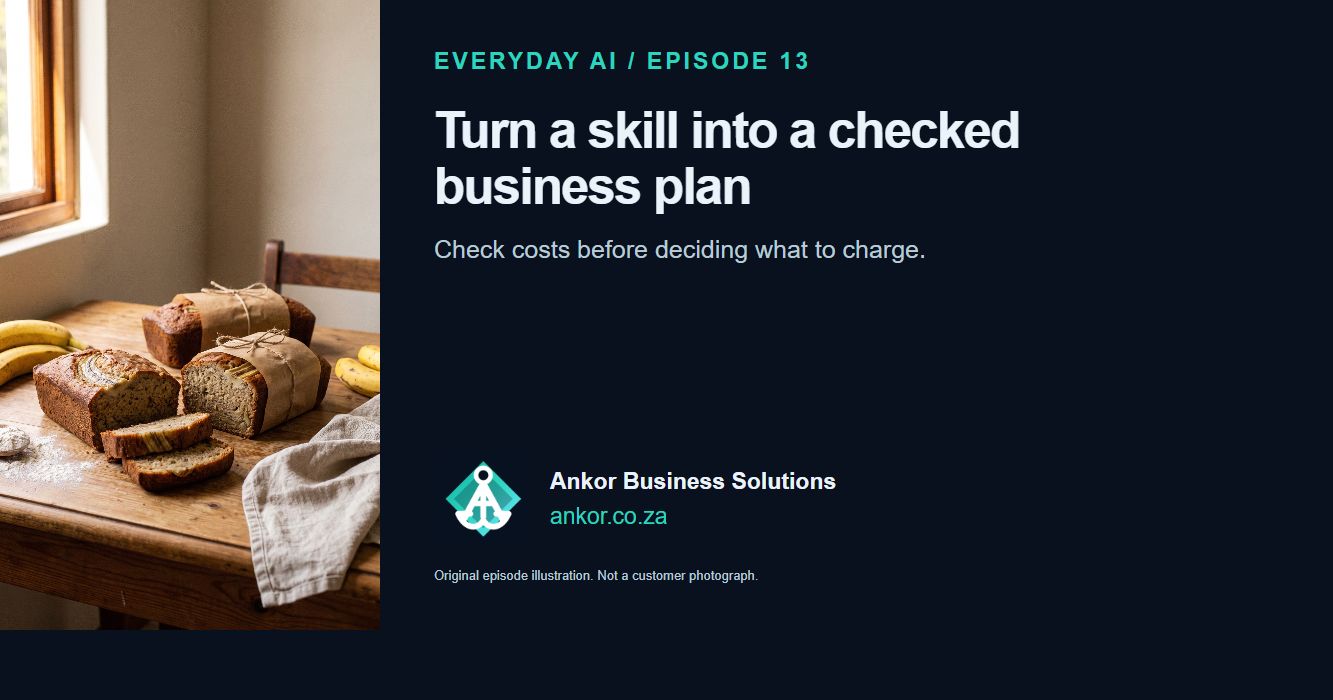
The on-screen video prompt is:I bake great banana bread. Give me 5 ways to sell from home and what to charge.The spoken request is “I bake well”, followed by five ways to sell from home and what to charge. A stronger follow-up asks the assistant to compare the options rather than immediately setting a price. Ask for a table with the potential customer, how you would reach them, preparation required, likely commitments and information still missing. An option might be convenient but require delivery you cannot provide. Another might depend on a market or retailer accepting you. Treat proposed channels as possibilities. A café, workplace or community group has its own rules and expectations. Contact the relevant person and ask before assuming you can sell there.
Build your cost sheet from real figures
Start with receipts, current supplier prices and your own measurements. For a product, record materials or ingredients, packaging, utilities you can reasonably allocate, delivery and other relevant costs. Include the time spent preparing, selling and handling orders. Separate costs that occur once from costs that recur with each item or batch. Equipment, a delivery charge and packaging may belong in different parts of the sheet. Ask the assistant to explain how it has allocated them. If one batch makes several items, measure the actual usable output. Do not divide by an ideal number when part of the batch is unusable. Ask for the formula as well as the result so you can check it. A useful instruction is:Use only the costs and quantities I provide. Separate one-time costs, recurring costs and assumptions. Show the calculation per usable item. Identify missing costs before discussing a possible selling price. Do not describe a price as profitable until all relevant costs have been checked.Missing information should remain missing. The assistant can help you ask what to measure next instead of filling the gap with a confident estimate.
Distinguish a calculation from a viable price
A calculation can show what your supplied figures add up to. It cannot establish what customers will pay or whether the figures capture every expense. Compare the proposed offer with relevant alternatives and talk to potential customers. The U.S. Small Business Administration’s planning guidance treats market research, business planning and startup costs as connected parts of planning a business. Its U.S. service arrangements are not a substitute for the rules and support available in your country. Ask AI to help make a short customer interview or feedback checklist. Useful questions might concern what the person would buy, when they would need it, quantities and collection or delivery. Keep the questions open rather than pushing for a compliment. Record the response as given. Interest is not an order, an order is not payment, and one sale is not proof of steady demand.Check the requirements before taking orders
Food, repairs, tutoring and other activities can have different local requirements. Find the authority relevant to the activity and location. Ask about food handling, premises, permissions, tax, insurance or other obligations where relevant. An assistant can help you draft questions for a council or business advice service. It should not invent a permit exemption or tell you that earning a small amount automatically removes your obligations. If you rent your home, check any relevant terms before assuming commercial activity is allowed there. If a platform or community group is the proposed sales route, read its rules. For a South African example, use rand only when recording your real local figures and check requirements with the appropriate South African authority. Elsewhere, use the applicable currency and local route. This article does not offer jurisdiction-specific legal or tax advice.Run a test you can actually deliver
Choose the smallest practical version of the offer. Decide how many orders you can fulfil, how you will confirm them and what you will do if something changes. Write down the offer, price, timing and collection or delivery arrangements in plain language. Have the assistant check the wording for ambiguity, then check every factual detail yourself. Avoid purchasing equipment because the AI says it will “pay for itself”. That statement needs evidence about costs, sales and time. If new spending is required, include it explicitly in the decision. Record actual orders, payments, expenses and time. Use a simple method you will maintain. You need those records to assess the test, rather than relying on a memory that it “went quite well”.Review before expanding
After the test, compare what happened with what you expected. Which tasks took longer? Which costs were missing? What did customers actually ask for? AI can organise your notes and suggest questions for the next round. It should not turn limited results into a revenue forecast presented as fact. Ask it to list uncertainties beside any projection. You might decide to repeat the same test, change the offer, try one of your other side hustle ideas or stop. Each is a useful outcome if based on what you learned. A side hustle does not need to become a larger business to justify a careful trial.Frequently asked questions
Can AI tell me a profitable selling price?
It can help calculate from supplied figures, but it cannot guarantee profitability or demand. Check all relevant costs and test the offer with real customers.What if I have no customers yet?
Use a small, affordable test and direct conversations to investigate interest. Do not treat compliments or AI forecasts as confirmed sales.Do I need to check local rules?
Yes. Requirements depend on the activity and location. Confirm them with the relevant authority or qualified adviser before taking commitments.How do I test side hustle ideas without spending much?
Keep the first offer narrow, take only as many orders as you can deliver, and record real orders, payments, costs and time. Avoid buying equipment until the test shows you need it.Learn the skill, then choose the system
Use Ankor’s ChatGPT for Beginners course to practise clear prompting. The habit of checking wording against real facts also appears in our guide to explaining an official letter with AI. If the side hustle grows into a real business, the Essential Business Package gives a one-person business a guided weekly rhythm. You can try it free for 7 days in ChatGPT or Claude. No card needed. After that, it’s once off or month to month. Follow Everyday AI from Ankor for practical ways to think through a task before acting.Watch Everyday AI Episode 13
Ankor tips
Stay in the loop
Practical AI tips for small businesses and the odd product update. No spam, unsubscribe any time.

